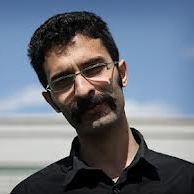
Saeed Shirzad
-
-
<coverage-outsourcing id='20290'>
In connection with the arrest in this year, he was sentenced to one year suspended imprisonment on charges of "propaganda against the regime" in Branch 26 of Tehran Revolutionary Court, headed by Judge Pir Abbasi. In the next detention, the order of the execution of this sentence was issued
</coverage-outsourcing>
-
<coverage-outsourcing id='31'>
Was arrested when he went to Ahar to help earthquake victims in East Azarbaijan.
</coverage-outsourcing>
-
<coverage-outsourcing id='32'>
Freed Evin Prison.
</coverage-outsourcing>
-
<coverage-outsourcing id='33'>
Arrested at his place of employment at Tabriz Refinery.
</coverage-outsourcing>
-
<coverage-outsourcing id='1023'>
Was stopped from going to court to give his last defense because he refused to wear unsanitary prison clothes and abusive treatment.
</coverage-outsourcing>
-
<coverage-outsourcing id='6439'>
Amnesty International demanded his release
</coverage-outsourcing>
-
<coverage-outsourcing id='1022'>
He went on a hunger strike with a number of other political prisoners after being sent to solitary confinement for protesting against forced yard time for prisoners of Evin Prison's Ward 8 during winter without warm clothes. He was then moved to Rajaee Shahr Prison
</coverage-outsourcing>
-
<coverage-outsourcing id='18265'>
After the prisoners' protest to mandatory yard time in cold winter weather and lack of warm clothing for the prisoners in ward 8 of Evin Prison, Asoo Rostami, Amir Amir Gholi, and Amir Houshang Navayi were moved to solitary confinements in ward 240 and went on hunger strike. Omid Alishenas, Saeed Shirzad, and Masood Arab Choobdar also went on hunger strike in their support. Shortly after, these three were also moved to solitary confinements in ward 240 along with Hamid Babayi and Abbas Rostam
</coverage-outsourcing>
-
<coverage-outsourcing id='6445'>
He walked out of his trial session in protest to not receiving prior notice for the trial, the absence of his attorney, and the fact that his attorney has not been allowed to study the case despite his many requests. He previously had refused twice to appear in court due to the mandatory handcuffs and shackles for the transfer
</coverage-outsourcing>
-
<coverage-outsourcing id='8169'>
Pirouz Mansouri, Saeed Shirzad, Soheil Babadi, Shahrokh Zamani, Shahin Zoghitabar, and Misah Yazdannezhad published a statement requesting Mohammad Taheri's death sentence to be overturned, stating this verdict is an assault to freedom of speech and freedom of assembly
</coverage-outsourcing>
-
<coverage-outsourcing id='6436'>
After 15 months of detainment, his trial session was held with judge Salavati presiding and his attorney present. He was sentenced to five years in prison on charges of "gathering and colluding for acting against national security." He was previously charged with "propaganda against the state", "acting against national security", "disturbing public order" and "spying for the United Nations" [contact with Ahmad Shaheed] during his interrogation process
</coverage-outsourcing>
-
<coverage-outsourcing id='2021'>
His lawyer was informed that his client has been sentenced to 5 years in prison by Judge Salavati at branch 15 of the Revolutionary Court of Tehran, on the charges of assembly and conspiracy against national security
</coverage-outsourcing>
-
<coverage-outsourcing id='6444'>
After the death of Shahrokh Zamani, he and five other prisoners voiced their objection to the conditions under which political prisoners are kept
</coverage-outsourcing>
-
<coverage-outsourcing id='6443'>
A number of Iranian political and civil activists published a statement condemning the recent wave of crackdowns on the country's civil activists, including Saeed Shirzad, and demanded their right to appeal and the release of those convicted and follow up on those civil prisoners who are in suspense awaiting a decision
</coverage-outsourcing>
-
<coverage-outsourcing id='6442'>
According to Harana, for the last two weeks, Saeed Masouri, Abolghasem Fouladvand, Ali Salanpour, Reza Akbari Monfared, Shahin Zoghitabar, Saleh Kohandel, Latif Hassani, Amir Ghaziani, and Saeed Shirzad have refused to go to visitation in protest to the three previous inspections done on visitation days
</coverage-outsourcing>
-
<coverage-outsourcing id='6440'>
Amnesty International demanded his release
</coverage-outsourcing>
-
<coverage-outsourcing id='6441'>
He went on a hunger strike in Rajai Shahr Prison in protest to the violation of the crime separation law
</coverage-outsourcing>
-
<coverage-outsourcing id='6437'>
According to Harana, although two years has passed since his arrest and eight months since his preliminary trial, this political activist is yet to receive a decision from the appeal court, and he is being kept in suspense in Hall 12 of ward 4 of Rajai Shahr Prison
</coverage-outsourcing>
-
<coverage-outsourcing id='6438'>
Harana reported that in the last two year many political and Human Rights organizations and prominent figures have demanded the release of Saeed Shirzad. The report mentions the statement by the Postal Workers Union of Canada, the letter from Barbara Lochbihler, the vice president of European Union's Human Rights Commission, and the published statement from the students at Walter Payton College in Chicago. Also, Ban Ki Moon, United Nation's secretary general had referred to Mr.Shirzad's case as one of the examples of Human Rights violations
</coverage-outsourcing>
-
<coverage-outsourcing id='7962'>
According to the Campaign to Defend Civil and Political Prisoners, 50 activist members of International Socialist Organization signed a petition supporting political prisoners and in particular Saeed Shirzad and Amir Amirgholi
</coverage-outsourcing>
-
<coverage-outsourcing id='7808'>
In a letter to United Nations' secretary general and the Human Rights Council, Saeed Masoury, Reza Akbari Monfared, Hassan Sadeghi, Shahin Zoghi, Mohamad Akramipour, Amir Ghaziani, Abolghasem Fouladvand, and Saeed Shirzad announced that they will go on a hunger strike in order to raise awareness to the terrible conditions of other prisoners, and in solidarity with Saleh Kohandel, Pirooz Mansoori, and Afshin Baymani, who were moved to solitary confinement after their objection to the execution of Sunni prisoners of conscience
</coverage-outsourcing>
-
<coverage-outsourcing id='9733'>
"Front Line Defenders" organization published a statement mentioning cases of Atena Daemi, Amir Amir Gholi, Saeed Shirzad, Jafar Azimzadeh, Shapour Ehsani, and Narges Mohammadi, and asked for the release and ending the persecution of human rights activists
</coverage-outsourcing>
-
<coverage-outsourcing id='9892'>
According to Zamaneh, political prisoners Saeed Shirzad, Behnam Mousivand, and Ali Moezzi, currently held at Rajayi Shahr Prison in city of Karaj, wrote a letter condemning the arrest of Golrokh Ebrahimi Iraee
</coverage-outsourcing>
-
<coverage-outsourcing id='10113'>
Twelve prisoners of ward 4 in hall 12 of Rajayi Shahr prison in Karaj announced their support of Maryam Akbari Monfared's lawsuit and demand for justice. This letter was published by Campaign to Defend Civil and Political Activists in Iran, and is documented in the Supporting Evidence section of this page. The signatories are as follows: Reza Akbari Monfared, Saeed Shirzad, Mohamad Ali Mansouri, Behnam Mousivand, Saleh Kohandel, Saeed Masouri, Javad Fouladvand, Hassan Sdeghi, Shahin Zoghitabar, Ali Moezzi, Mehdi Farahi Shandiz, and Khaled Hardani
</coverage-outsourcing>
-
<coverage-outsourcing id='10503'>
In an open letter to Arash Sadeghi titled "Once again you cried out humanity", Saeeed Shirzad wrote that he has never asked anyone to break their hunger strike, but he is asking Arash to leave his hunger for another day. Two days later Arash responded to him with a letter saying he didn't decide to go on hunger strike to "defend one person" and "Golrokh is a symbol for the oppression of all the imprisoned women in our society today who are charged with being a human and having a sense of responsibility". These letters that were published by Harana, are documented in the Supporting Evidence section of this page
</coverage-outsourcing>
-
<coverage-outsourcing id='10856'>
Saeed Shirzad started his hunger strike by sewing his lips shut and writing a letter announcing his protest to "silent death of prisoners by the hands of the warden (Mohammad Mardani)." In his letter he lists the reasons for his protest as follows:
> constant mistreatment of the families of prisoners, not accepting the hunger strike announcement letters in order to remove the medical responsibility of the prison authorities, arresting the family members of political prisoners in visitation hall, refusing to send sick political prisoners to medical treatment centers, battery of political prisoners and sending them to court by force, and blocking the ventilation in the hall by welding the doors and windows shut, which puts the prisoners' health at risk
</coverage-outsourcing>
-
<coverage-outsourcing id='11023'>
Harana published a letter signed by a group of former political prisoners and families of political prisoners and victims. In this letter they have asked the prisoners on hunger strike to end their strike, because in current conditions where "there is no strong will for a widespread grassroots movement, hunger strike specifically has no sustainable result but the destruction and decay of freedom fighters and bringing joy to the regime authorities
</coverage-outsourcing>
-
<coverage-outsourcing id='11160'>
In a letter responding to the request of a group of former political prisoners and families of political prisoners and victims who had asked him to end his hunger strike, he said depending on "the voice of the voiceless being heard or not", he will end his hunger strike or change it into dry hunger strike
</coverage-outsourcing>
-
<coverage-outsourcing id='11539'>
Human Rights Activists in Iran group issued a statement inviting "the judicial authorities to act independently from security institutions" and while emphasizing the need to transfer prisoners on hunger strike - particularly Arash Sadeghi - to medical centers, they asked for opening the door to negotiation with the prisoners on strike, namely Ali Shariati, Saeed Shariati, Hassan Rastegari, Nezar Zaka, Mohammad Reza Nekounam, and Mehdi Koukhian
</coverage-outsourcing>
-
<coverage-outsourcing id='11676'>
A crowd of fifty gathered in front of Iranian embassy in Berlin in support of Arash Sadeghi, Ali Shariati, and Saeed Shirzad, and other prisoners on hunger strike
</coverage-outsourcing>
-
<coverage-outsourcing id='11667'>
Zamaneh published a report regarding Saeed Shirzad's hunger strike in protest to violations prisoners' rights and described the conditions of Rajai Shahr Prison in Karaj. According to the report, there are only two nurses in the prison for almost five thousand prisoners, prison medical center consists of a few dirty beds, medical center is not hygienic, in the general population wards the guards refuse to transfer individuals to the prison clinic which has caused the deaths of several inmates, the bureaucratic process for issuing the transfer permission for a prisoner who needs to be transferred to a hospital urgently, takes several hours, a delay which can cost the prisoner his life. Despite the overpopulation of Rajaee Shahr Prison, the specialist physician only attends the prison clinic once a week; there are no treatments for mental patients, and prisoners have to pay for Hepatitis vaccine personally. Also, political prisoners are not allowed to use the library and gym and the phones in their hall has been disconnected for the last five years. On top of that, although the attorney general's office has no objection to political prisoners' education, the prison authorities have denied them this right
</coverage-outsourcing>
-
<coverage-outsourcing id='11729'>
Farid Azmoudeh, Jafar Eghdami, Saeed Pourheidar, Behzad Tarahomi, Vahid Tizfahm, Khaled Hardani, Latif Hassani, Vahed Kholoosi, Kayvan Rahimian, Saeed Rezaee, Jaber Abedini, Ebrahim Firouzi, Saeed Massouri, and Payam Markazi wrote a statement in support of Saeed Shirzad's demands and invited the prison authorities and the Judiciary to uphold the "natural rights" of prisoners. The letter is documented in the Supporting Evidence section of this page
</coverage-outsourcing>
-
<coverage-outsourcing id='11748'>
On the 30th day of his hunger strike, Saeed Shirzad wrote a letter stating due to "the continuation of the status quo" of violating the prisoners' rights in Rajaee Shahr Prison, he has decided to continue his hunger strike. This letter, titled "My Death is the Rebellion of a Life That Does not Wish to End" is documented in the Supporting Evidence section of this page
</coverage-outsourcing>
-
<coverage-outsourcing id='11968'>
In a joint statement, Asemeh Jahangir, United Nation's special rapporteur on Human Rights in Iran, along with Michel Fost, the special rapporteur on Human Rights Defenders, and Roland Adjovi, United Nation's rapporteur in the Working Group on Arbitrary Detention, voiced their concern regarding the hunger strikes of Arash Sadeghi, Ali Shariati, Saeed Shirzad, Mohammad Ali Taheri, Mehdi Koukhian, Mohammad Reza Nekounam, Hassan Rastegari Majd, and Nezar Zaka, and warned about the risks to the lives of these prisoners due to the length of their hunger strike. While warning about the critical conditions of several ideological and political prisoners on hunger strike, he three UN rapporteurs have asked the Iranian government for the immediate and unconditional release of these prisoners who were arrested arbitrarily. According to Zamaneh, the statement refers to the aforementioned individuals as prisoners who are being persecuted for using their right to free speech and for their peaceful efforts to promote Human Rights in Iran
</coverage-outsourcing>
-
<coverage-outsourcing id='12006'>
He was transferred to a hospital in an emergency on the 37th day of his hunger strike. A photo released in recent days shows Saeed to be severely weak. The photo is documented in the Supporting Evidence section of this page
</coverage-outsourcing>
-
<coverage-outsourcing id='12011'>
According to Harana, he was returned to Prison. According to the report, his stomach is producing excessive acid, his body is dehydrated, and the muscles in his feet and ankle have severely lost mass. After receiving a serum to regulate his heartbeat and refusing to receive a nutrition serum, he was returned to prison
</coverage-outsourcing>
-
<coverage-outsourcing id='12013'>
His attorney, Amir Salar Davoudi warned the Campaign for Human Rights in Iran about the well-being of his client and asked the Iranian judicial authorities to "sit down and talk with this political prisoner before it is too late"
</coverage-outsourcing>
-
<coverage-outsourcing id='12077'>
He ended his hunger strike after a visit from the prison's supervising judge, Mr. Kohandani, who is also the representative of the attorney general, and the promise by the authorities to meet his demands
</coverage-outsourcing>
-
<coverage-outsourcing id='12056'>
He wrote a letter criticizing the letter of 30 political and civil activists to Trump and attended the funeral of Hashemi Rafsanjani, he calls the aforementioned the two sides of "The Right Movement", and invites the Iranian Left forces to organize and join the battlefield. The letter, published by Praxies website, is documented in the Supporting Evidence section of this page
</coverage-outsourcing>
-
<coverage-outsourcing id='12025'>
In a letter to Asemeh Jahangir, a group of twenty prisoners in Rajaee Shahr Prison expressed their concern about Saeed Shirzad's conditions. The letter is documented in the Supporting Evidence section of this page
</coverage-outsourcing>
-
<coverage-outsourcing id='12375'>
Amnesty International published a statement warning about the health of Saeed Shirzad after the termination of his hunger strike and underlined that “the inhumane conditions of the prison have to change.” This statement is available in the evidence section of this page
</coverage-outsourcing>
-
<coverage-outsourcing id='12949'>
Saeed Shirzad wrote a letter to Maryam Karimbeigi speaking of the resolve of “our Shanaz mother” and calling on her to resist
</coverage-outsourcing>
-
<coverage-outsourcing id='13145'>
The Kurdistan Human Rights Network reports, Saeed Shirzad and Zanyar Moradi have written a letter expressing their sympathy for the family of the murdered, or killed by accident, goods carriers and requested the prosecution of those responsible and implicated in the “continuation of these killings, mass murders, and politics that have ruled Kurdish society for decades”
</coverage-outsourcing>
-
<coverage-outsourcing id='13144'>
According to the Kurdistan Human Rights Network, after being summoned to the court of appeals, he refused to appear because his lawyer had not been informed of the hearing
</coverage-outsourcing>
-
<coverage-outsourcing id='14624'>
The appeal court of Saeed Shirzad was held at Branch 54 of the Tehran Appeal Court with the presence of judges Babaei and Kiasati. The court upheld his five-year prison sentence for "Gathering and Colluding For Action Against National Security," adding that he was sentenced to a one-year suspended imprisonment on charges of "Propaganda Against the Regime"
</coverage-outsourcing>
-
<coverage-outsourcing id='15908'>
HRANA, quoting an informed source, reported that during his incarceration was inflicted with “ severe back cartilage pain” and that sometimes “he is immobile for several weeks” making him have to walk with a walker. This pain, which, did not exist before prison, began around two years ago and only around two weeks ago was he transferred to the hospital
</coverage-outsourcing>
-
<coverage-outsourcing id='16124'>
Wrote a letter asking for help in saving Hamed Zahedi, a prisoner, condemned to retribution. This letter, published by Gooya News can be found in the evidence section of this page
</coverage-outsourcing>
-
<coverage-outsourcing id='16405'>
Prison authorities prevented his family from visiting him. According to HRANA, they, announced that Saeed Shirzad “by the order of the prosecutor,” has been deprived of visitation rights
</coverage-outsourcing>
-
<coverage-outsourcing id='19453'>
After the collective transfer of the political and ideological/religious prisoners of Rajaei Shahr prison to a new ward, a number of them began a hunger strike.This widespread hunger strike led to the prison guards and staff’s mistreatment of prisoners’ families, threatening of prisoners, putting prisoners in solitary confinement and withholding medical treatment and medicines. The collective protest was met with the media reaction of the judiciary, and the support of human rights organizations and some of the civil and political activists. Because some of the prisoner terminated their strike sooner and some of them were, also, transferred to solitary cells, the list of names changed during the period of the hunger strike, but in general, the names of prisoners who partook in the hunger strike, whose names have been confirmed by verified lists, are as follows: Majid Asadi, Jafar Eghdami, Saeed Shirzad, Saeed Masouri, Shahin Zoghitabar, Reza Akbari Monfared, Abolghasem Fouladvand, Hasan Sadeghi, Reza Shahabi, Mohammad Nazari, Payam Shakiba, Mohammad Banazadeh Amirkhizi, Mohammal Ali Mansouri, Ebrahim Firouzi, Amir Ghaziani, Vahid Sayad Nasiri, Hamid Babaei, Zanyar Moradi, Loghman Moradi, Houshang Rezaei and Saeed Pourheydar. Among them Saeed Shirzad, Reza Shahabi, and Mohammad Nazari’s hunger strike lasted longer than 50 days.The last two, had continued their hunger strike in protest to the situation of their own cases
</coverage-outsourcing>
-
<coverage-outsourcing id='19066'>
According to IPA, he was transferred to ward 3
</coverage-outsourcing>
-
<coverage-outsourcing id='19095'>
Ended his hunger strike
</coverage-outsourcing>
-
-
<coverage-outsourcing id='19726'>
Arash Sadeghi, Saeed Shirazi, and Saeed Masouri wrote a letter from Rajaei Shahr prison in Karaj to the international human rights organizations, describing the condition of Majid Asadi, stressing that he “suspects having intestinal cancer” and “has lost eight kilos of weight during the past two weeks”
</coverage-outsourcing>
-
<coverage-outsourcing id='19440'>
The Boroumand Foundation reported that two days ago he was admitted into the hospital, he remains barred from visitations and has been transferred to the dangerous criminal prisoners ward
</coverage-outsourcing>
-
-
<coverage-outsourcing id='19602'>
According to the Kurdistan Human Rights Network, Saeed Shirzad and Zanyar Moradi, wrote a letter from Rajaei Shahr in Karaj prison, asking for the support and solidarity of political and civil activists of Kurdistan for Mohammad Nazari
</coverage-outsourcing>
-
-
-
<coverage-outsourcing id='20415'>
HRANA in its reports, wrote of the developments after the transfer of political prisoners to the 10th hall of ward 10 and that Mostafa Mohebbi (head of the Tehran prisons organization), Mohammad Mardani (the head of the prison), Mostafa Ziaei (current prison director), Kohandani (supervisor judge of the prison) And Sigaroudi (prison’s judicial deputy) have been involved in various transitions and subsequent catastrophes. According to current and former chiefs, restrictions have been imposed with Mostafa Mohebbi's orders and supervision. According to the report, most of the political prisoners’ belongings were not returned to them, and some of them were sold in other prisons; heating facilities, ventilation and hot water do not work properly, and prisoners have to heat the kettle for bathing. The prison authorities detached the Baha'i prisoners from the others and isolated them in the hall of the hall 11. On the orders of Mohammad Mardani and in collaboration with Mr. Kohandani and Mr. Sigaroudi, cases have been opened for Saeed Massouri, Reza Akbarimonfard, Saeed Shirzad, Hassan Sadeghi, Amir Ghaziani, Jafar Eghdami, Abolghasem Fouladvand and Ebrahim Firoozi, eight prisoners who were transferred to the solitary confinement during their hunger strike, with allegations of "insulting the leadership, shouting slogans against officials and disturbing the prison’s order." Shortly afterwards, Saeed Pourheidar, Saeed Shirzad, Amir Ghaziani and Ebrahim Firoozi were also accused of "destroying public property". Access to the store and open space is also limited, prisoners are abused and mistreated by the prison authorities when getting transferred to the hospital or court, and that the political prisoners do not have access to newspaper and there is only one TV in the hall
</coverage-outsourcing>
-
-
<coverage-outsourcing id='22049'>
HRANA reported that he was again sentenced to six months in prison for protests due to the forced transfer of political prisoners to a new hall. This sentence was confirmed by the Appeals Court. Whether or not the Article 134 will be applied in this case is still unknown
</coverage-outsourcing>
-
<coverage-outsourcing id='23019'>
HRANA reported that despite his worsening physical health, personal payment of all treatment costs and the issuing of a license by the Prosecutor’s office allowing him to be transferred to a treatment centre, officials have - without giving any reasons - refused his transfer to a hospital. Saeed Shirzad has been getting around using a walker for the past two weeks
</coverage-outsourcing>
-
-
-
-
-
-
<coverage-outsourcing id='29937'>
<reference source='https://www.hra-news.org/2020/hranews/a-24353/'>
He is still in prison, even though he served his sentence. It seems that Amin Vaziri, the special prosecutor for political prisoners is involved with this obstruction
</reference>
</coverage-outsourcing>
-
<coverage-outsourcing id='30378'>
<reference source='https://twitter.com/shirzad_fatemeh/status/1256580601030811649?s=20'>
Was released in prison after serving full term
</reference>
</coverage-outsourcing>
-
-
-
-