Saeed Malekpour
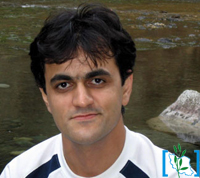
-
-
<coverage-outsourcing id='14164'>
He traveled to Canada in 2005 and was admitted to Victoria University in 2008
</coverage-outsourcing>
-
<coverage-outsourcing id='14165'>
He was arrested by plain-clothes officers without a warrant or identification in Vanak Square in Tehran while he was visiting his ill father before beginning his education in Canada. He was transferred to solitary confinement in Ward 2A of Evin Prison
</coverage-outsourcing>
-
-
<coverage-outsourcing id='1344'>
His father passed away while he was incarcerated but he was not informed until 40 days had passed due to his lack of contact with his family. He was not allowed to attend his father's mourning ceremony
</coverage-outsourcing>
-
<coverage-outsourcing id='1332'>
He was incarcerated in solitary confinement for more than 10 months without access to books, newspapers, or any contact with the outside world
</coverage-outsourcing>
-
<coverage-outsourcing id='1333'>
He was transferred to solitary confinement in Detention Center 240 of Evin.
</coverage-outsourcing>
-
<coverage-outsourcing id='1334'>
He was initially quarantined in Ward 7 then transferred to Ward 350 of Evin Prison
</coverage-outsourcing>
-
<coverage-outsourcing id='1343'>
His televised confession was aired through the Gardab website and the FARS News Agency
</coverage-outsourcing>
-
<coverage-outsourcing id='14156'>
His wife, Fatemeh Eftekhari, wrote a letter to the head of the judiciary explaining the case of Saeed Malekpour and the violations of the fair trial. According to the letter, Saeed Malekpour could defend himself "in the presence of a computer expert in court." He was detained for more than 12 months in solitary confinement "under all kinds of mental, psychological and physical torture." He told Tehran Revolutionary Court (Judge Moghiseh) that the confessions were obtained "under torture and psychological pressure." The judge did not accept his request for continued access to a lawyer and a computer expert. The confessions were broadcast on Tv, before the verdict issuance up to a year before the trial, "to destroy and insult the reputation of individuals." At the same time, only a 15-minute before trial, the judge told the lawyer that he had considered the death sentence. The audio file of Saeed Malekpour's statements includes cases of "violation of human rights" attached to the letter. Judicial officials have not responded to letters so far. In the letter, she asked the judiciary head to order an investigation before issuing a verdict. This letter is recorded in the evidence section of Saeed Malekpour's page
</coverage-outsourcing>
-
-
-
-
-
-
<coverage-outsourcing id='1335'>
He was charged with "Managing Farsi pornography sites" by the Iranian Cyber Army. He was also charged with "Propaganda against the system, Relations, collaboration with, or membership in organizations that aim to disrupt national security, Insulting the Supreme Leader and Ayatollah Khomeini, Enmity against God ,Insulting Islam, and Insulting the President". He was tried in Branch 28 of the Revolutionary Court presided by Judge Moghiseh and sentenced to execution and 7.5 years in prison
</coverage-outsourcing>
-
<coverage-outsourcing id='14166'>
Following Saeed Malekpour's death sentence's re-issuance, his family described the fair trial violations attempted in Tehran Revolutionary Court, presided over by Judge Moghiseh. According to the letter, published by the Boroumand Foundation, Judge Moghiseh brought Saeed Malekpour's interrogators to the trial instead of the Judiciary expert. Five other defendants, who were also under pressure, gave "contradictory" testimonies against Saeed. The case lacks a technical expert, and the forced confessions obtained from Saeed Malekpour are "technically impossible." They asked, "Why the judge is opposed to the presence of an expert and the accused to forensic medicine to investigate allegations of torture?" The letter also states that the trial began with "insults to the defendant and his lawyer" by the judge. Lawyers were not allowed access to the case until a week before the trial and had to read a 25-volume case, each over 200 pages long. The IRGC has gone so far as to include "several Playboy magazine issues as evidence in the case file." This letter recorded in the evidence section of this page
</coverage-outsourcing>
-
<coverage-outsourcing id='1345'>
His sentence was upheld in the Supreme Court
</coverage-outsourcing>
-
-
-
-
-
-
<coverage-outsourcing id='1337'>
His sentence of execution was sent to the Sentence Enforcement Unit
</coverage-outsourcing>
-
-
<coverage-outsourcing id='1338'>
According to his attorney, Mahmood Alizadeh Tabatabaei, his sentence of execution had been stopped.
</coverage-outsourcing>
-
-
<coverage-outsourcing id='1339'>
It was announced that his death sentence was reduced to life in prison
</coverage-outsourcing>
-
-
-
-
<coverage-outsourcing id='13887'>
Amnesty International North American chapter, has devoted a letter writing campaign for the Iranian new year, Norouz, addressing: Saeed Malekpour, Keyvan Karimi, Mehdi Rajian, Hossein Rajabian, Nargess Mohammadi, MohammadAli Taheri, Atena Daemi, and Mahvash Sabet
</coverage-outsourcing>
-
-