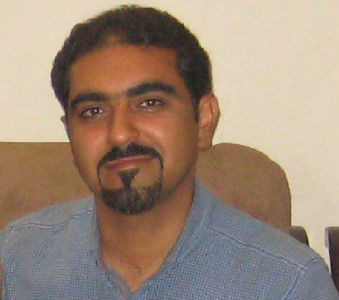
Nabil Tahzib
-
<coverage-outsourcing id='7541'>
According to IPA, intelligence officials arrested six people in a class and sent them to the intelligence detention house in Shiraz. Nooshin Bahari stayed in detention for 29 days, Ramin Shirvani for 35 days, Esmail Roosta for about 67 days, Behnam Azizpoor for about 70 days, Sayid Hasani for about 70 days, and Yekta Fahandaj Saadi for about 81 days. Three days after intelligence forces had attacked this educational class, Nabil Tahzib and Nayim Qayedsharafi were also arrested. Nabil remained in detention for 80 days but Nayim was released shortly after. Two other people were also arrested in this case and released a few hours later.
A credible source tells IPA: “From what we heard later, the intelligence officials mistreated them. Long solitary periods without access to books or magazines, blindfolds, blind interrogation, kicking their chair, insulting them, insulting Baha’i beliefs, and many insults and humiliation. The boys were beaten up during interrogation. As they faced the wall and couldn't see their interrogators, they were kicked and punched. One of the intelligence officials had told one of the girls: “because you are ritually unclean, I won’t touch you. But I’ll get an order to lash you and then I’ll lash you until you either die or write what you need to write.” This was the kind of atmosphere they had built for them. These people had changed their religion of their own volition and they wanted to bring them back to Islam with kicks and punches. The usual lack of access to lawyers and weeks of cutting connections with family was also there as usual.”
“The class attacked by the intelligence forces was held periodically and each session related to a topic aimed at improving society. The classes were not religious. But I should say that propagating one’s religion is a definite right of Iranian citizens. But these classes were not at all religious or related to propagation. I mean that even within the tyrannical logic of the security-judicial machinery of the Iranian government, they couldn’t be objected to”.
</coverage-outsourcing>
-
-
<coverage-outsourcing id='7970'>
Bazdasht reported that after over two weeks, he still has had no phone contact or visitation with his family
</coverage-outsourcing>
-
<coverage-outsourcing id='9214'>
On this group arrest, "Justice for Iran" reported that Yekta Fahandezh Sadi, Behnam Azizpour, Saeed Hassani, Esmail Rousta, and Nabil Tahzib are still being kept in solitary confinement at Number 100 jail. They have not been granted lawyers. They are under psychological torment from their interrogators. They are being interrogated with blindfolds and have to face the wall, and the interrogations include insults and threats. These environmental activists are being pressured in to "make pledges in return for their freedom", and their families have been threatened against making their case public. Their family members have been insulted, and their personal vehicles have been searched and confiscated
</coverage-outsourcing>
-
<coverage-outsourcing id='9639'>
According to "Bazdasht" Nabil Tahzib and Yekta Fahandezh Sadi were released on 250 million Toman bails
</coverage-outsourcing>
-
<coverage-outsourcing id='40160'>
<reference source='https://www.hra-news.org/2020/hranews/a-25207/'>
According to HRANA, the first trial session of the 26 Baha'i citizens was held at the first branch of the revolutionary court of Shiraz. Parisa Rouhizadegan, Esmail Rousta, Bahareh Norouzi, Behnam Azizpour, Samar Ashnaei, Ramin Shirvani, Rezvan Yazdani, Soroush Ighani, Saeed Hassani, Shadi Sadegh Aghdam, Shamim Akhlaghi, Sahba Farahbakhsh, Sahba Moslehi, Ahdieh Enayati, Farbod Shadman, Farzad Shadman, Lala Salehi, Mozhgan Gholampour, Marjan Gholampour, Maryam Eslami, Mahyar Sefidi, Nabil Tahzib, Nasim Kashaninejad, Noushin Zenhari, Vargha Kaviani, and Yekta Fahandezh Saadi have been charged with propaganda against the state in the interest of dissident groups, managing dissident groups, membership in aforementioned groups, propaganda, collusion with enemy states and global imperialism through implementing their plans in Iran in the form of Baha'i organization. After the attorneys stated the flaws in the case Judge Mahmoud Sadati sent the case back to the prosecutor’s office for another review.
</reference>
</coverage-outsourcing>
-
<coverage-outsourcing id='40162'>
<reference source='https://www.hra-news.org/2022/hranews/a-34786/'>
According to HRANA, after the prosecutor amended the flaws in the case, the second trial session of the 26 Baha'i citizens was held at the first branch of the revolutionary court of Shiraz.
</reference>
</coverage-outsourcing>
-
<coverage-outsourcing id='40163'>
The third trial session of the 26 Baha'i citizens was held at the first branch of the revolutionary court of Shiraz presided by Judge Mahmoud Sadati. An IPA source reported that during the session the charges changed to assembly and conspiracy against national security, article 610 of the Islamic Penal Code. The attorneys must now adjust their defense based on this change in charges.
</coverage-outsourcing>
-
<coverage-outsourcing id='40172'>
<reference source='https://www.hra-news.org/2022/hranews/a-35288/'>
The first branch of the revolutionary court of Shiraz presided by Judge Mahmoud Sadati convicted the 26 Baha'i citizens of assembly and collusion with intent to commit crimes against national security. According to the report, Yekta Fahandezh Saadi, Lala Salehi, Bahareh Norouzi, Rezvan Yazdani, and Mozhgan Gholampour were each sentenced to five years in prison, two years ban from leaving the country by revoking passports, and two years of daily reports at the Information Ministry office in the province. Nabil Tahzib, Sahba Moslehi, Behnam Azizpour, Esmail Rousta, Ramin Shirvani, and Saeed Hassani were each sentenced to five years in prison, and two years ban from leaving the country by revoking passports, and banishment to different cities across the country; Nabil Tahzib to Izeh, Sahba Moslehi to Ferdows, Behnam Azizpour to Dehdasht, Esmail Rousta to Bafgh, Ramin Shirvani to Bagh Malek, and Saeed Hassani in Lordegan. They were also ordered to report daily to the Information Ministry office in their province. Maryam Eslami, Parisa Rouhizadegan, Marjan Gholampour, Shadi Sadegh Aghdam, Ahdieh Enayati, Samar Ashnaei, Nasim Kashani Nejad, Sahba Farahbakhsh, and Noushin Zenhari were each sentenced to two years in prison, two years ban from leaving the country by revoking passport, and two years of daily reports to the Information Ministry office in their cities. Mahyar Sefidi, Vargha Kaviani, Shamim Akhlaghi, Farzad Shadman, Farbod Shadman, and Soroush Ighani were each sentenced to two years in prison, two years ban from leaving the country by revoking their passport, and two years on banishment; Mahyar Sefidi to Lamerd, Vergha Kaviani in Kashmar, Shamim Akhlaghi to Semirom, Farzad Shadman to Minab, Farbod Shadman in Firouzabad, and Soroush Ighani in Mehriz and two years of daily reports to the Information Ministry of their cities. According to the report, the court used “their presence and assembly at poor neighborhoods in the suburbs of Shiraz; assembly at tourism sites and religious holy sites including Shah Cheragh, Hafezieh, Persepolis, and Narenjestan, claiming to assess the water crisis and social harms, and environmentalism; but in reality, assembly and conspiracy to create mental and ideological insecurity in the Islamic society by using the false and dangerous claims that their corrupt cult is superior to all other divine religions to create sedition and attracting Muslims, and their tactics and actions in executing the devious plans of the leaders of their cult.”
</reference>
</coverage-outsourcing>
-
<coverage-outsourcing id='41688'>
<reference source='https://www.hra-news.org/2022/hranews/a-36815/'>
The 37th branch of the appeal court of Fars Province presided by Judge Saeed Bolandzadeh and magistrate Kamran Zare removed the exile punishment, reduced the sentences of some of the 26 Bahai citizens, and confirmed the rest. According to the ruling published by HRANA, Fahandezh Saadi, Mozhgan Gholamopour, Rezvan Yazdani, Bahareh Norouzi, Nabil Tazhib, Behnam Azizpour, Sahba Moslehi, Ramin Shirvani, and Saeed Hassani were each sentenced to five years in prison, banned from leaving the country by revoking their passports and reporting to the Intelligence Ministry office of the province daily. Shadi Sadegh Aghdam, Parisa Rouhizadegan, Marjan Gholampour, Ahdiyeh Enayati, Samar Ashnaei, Maryam Eslami, Shamim Akhlaghi, Mahyar Sefidi, Vargha Kaviani, Sahba Farahbakhsh, Farzad Shadman, and Farbod Shadman were each sentenced to two years in prison and banned from leaving the country with similar conditions. Soroush Ighani, Esmail Rousta, Noushin Zenhari, and Nasim Kashani had their sentences reduced to six months in prison and a similar ban from leaving the country for two years.
According to an HRANA source, before the verdict was issued, Mr. Sahba Moslehi provided the court with a written testimonial about the coerced confessions, the torture methods, and sexual and religious insults during their time in lockup, but Judge Bolandzadeh completely ignored it.
A source told HRANA that in the verdict, the gender of Mr. Shamim Akhlaghi was recorded as female and Ms. Sahba Farahbakhsh as male, which was eventually fixed. The source said:
> The question is, if the revolutionary court of Shiraz that issued the initial verdict didn't know their gender, what did they use as the basis for their verdict?
</reference>
</coverage-outsourcing>
-
-